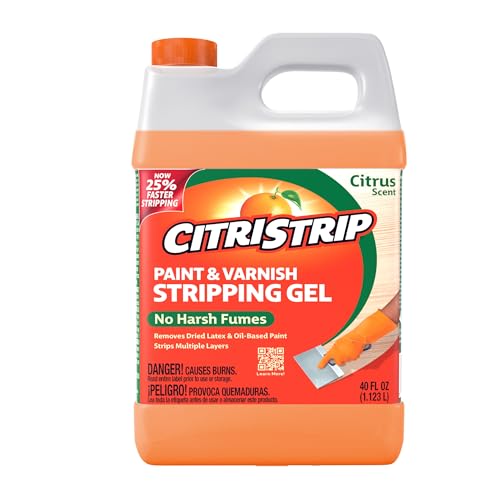
Citristrip Stripping Gel, 40 oz: A Detailed Review for DIY Enthusiasts
Tackling a furniture makeover or refreshing a tired-looking door? Stripping old paint or varnish is often the first, and most daunting, step. Citristrip Stripping Gel promises a less harsh, more user-friendly experience compared to traditional paint strippers. This review delves into the features, performance, and overall value of Citristrip Stripping Gel, 40 oz., to help you determine if it's the right solution for your next project. We’ll look at how it stacks up against other chemical strippers and whether its citrus scent is enough to justify its use.
Citristrip aims to provide a safer alternative to harsh chemical paint removers, claiming to be low in VOCs (Volatile Organic Compounds) and safe for indoor use when properly ventilated. This gel formula is designed to cling to vertical surfaces, minimizing drips and making it easier to work on a variety of projects, from intricate furniture details to larger surfaces like doors and trim. But does it live up to the hype? Let's find out.
Key Features of Citristrip Stripping Gel
- • Gel Formula: Clings to vertical surfaces, reducing drips and making application easier.
- • Low VOCs: Formulated with low volatile organic compounds, making it a more environmentally friendly option compared to traditional strippers.
- • Citrus Scent: A pleasant citrus scent helps to mask the typical harsh chemical odors associated with paint strippers.
- • Non-Flammable: Considered non-flammable for added safety during use and storage.
- • 40 oz Size: The 40 oz container provides ample product for multiple projects or larger surface areas.
Pros: The Advantages of Using Citristrip
- • Less Offensive Odor: The citrus scent is a major advantage, making the stripping process far more bearable than traditional, intensely chemical-smelling strippers. While still needing adequate ventilation, the reduced odor significantly improves the user experience.
- • Easy Application: The gel consistency makes it easy to apply to various surfaces, including vertical and intricate areas. It adheres well and minimizes drips, contributing to a cleaner workspace.
- • Gentle on Surfaces: Citristrip is generally considered gentler on surfaces compared to harsher chemical strippers. This makes it a good choice for delicate wood furniture or projects where preserving the original surface is a priority. It reduces the risk of damage or discoloration.
- • User Friendly: With its lower VOCs and gel application, Citristrip is often seen as easier to use than competing paint stripper products, making it a great choice for beginners or those with sensitive skin.
Cons: The Drawbacks of Citristrip
- • Slower Acting: Compared to more aggressive chemical strippers, Citristrip often requires longer dwell times to effectively remove multiple layers of paint or tough finishes. This can be a significant drawback for those seeking faster results. Sometimes requires multiple applications.
- • Can be ineffective on certain coatings: While it works well on many types of paint and varnish, Citristrip may struggle with certain modern coatings, particularly epoxy-based paints or very hard finishes. More stubborn coatings may require more aggressive chemicals.
Who Should Buy Citristrip Stripping Gel?
Citristrip Stripping Gel is an excellent choice for DIYers, hobbyists, and homeowners who are undertaking furniture restoration projects, refinishing doors, or tackling other stripping tasks where a less harsh and more user-friendly approach is desired. If you're sensitive to strong chemical odors or concerned about the environmental impact of your projects, Citristrip offers a viable alternative to traditional paint strippers.
It's also a great option for those working with antique or delicate furniture where preserving the original wood is important. The gentler formula minimizes the risk of damage, making it a safer choice for valuable or sentimental pieces. Consider Citristrip if you prioritize a less toxic environment and don’t mind a longer working time. However, if speed is your top priority, you may want to explore other, more aggressive stripping agents.
For those comparing Citristrip to alternatives like Klean-Strip or other methylene chloride-based paint removers, understand the trade-offs. Klean-Strip generally works faster but has significantly harsher fumes and requires more stringent safety precautions. The choice depends on your individual needs and risk tolerance.
Conclusion: Is Citristrip Worth the Purchase?
At a price of $23.99 for a 40 oz container, Citristrip Stripping Gel offers a reasonable value for those seeking a less toxic and user-friendly paint stripping solution. While it may require more time and effort compared to harsher chemical strippers, the reduced odor, ease of application, and gentler formula make it a worthwhile investment for many DIY projects. If you are stripping paint, consider Citristrip stripping gel.
Final Verdict: Citristrip Stripping Gel is a good choice for DIYers looking for a less harsh, more pleasant paint stripping experience, even if it requires a bit more patience. Its low VOCs and user-friendly application make it a solid option for most home projects, particularly those involving delicate surfaces.
FAQ About Citristrip
Q: How long does Citristrip take to work?
A: Dwell times vary depending on the number of layers and type of coating. Typically, it's recommended to leave Citristrip on for at least 30 minutes to 24 hours.
Q: Can Citristrip be used indoors?
A: Yes, Citristrip can be used indoors, but proper ventilation is still recommended.
Q: What safety precautions should I take when using Citristrip?
A: Wear gloves, eye protection, and ensure adequate ventilation. Avoid contact with skin and eyes.
Q: What is the best way to remove Citristrip after it has soaked?
A: Use a scraper to remove the softened paint and Citristrip residue. Clean the surface with mineral spirits or water, depending on the manufacturer's instructions.