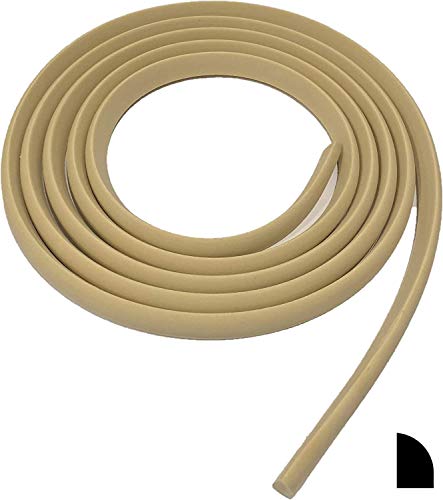
FlexTrim #WM126 Flexible Base Shoe Molding Review: The Easy Way to Finish Your Floors
Finishing a flooring project can be challenging, especially when dealing with curved walls, archways, or irregular surfaces. Traditionally, this requires painstaking cuts and a lot of wasted material. But what if you could achieve a professional look with ease? The FlexTrim #WM126 Flexible Base Shoe Molding aims to solve this problem. This 1/2" x 3/4" molding is designed to bend and conform to various shapes, offering a streamlined solution for tackling those tricky spots in your home renovation project. Whether you're a seasoned contractor or a DIY enthusiast, this flexible trim promises to simplify the process of adding that finishing touch.
This review dives deep into the FlexTrim #WM126 Flexible Base Shoe Molding, exploring its features, benefits, and drawbacks to help you decide if it’s the right product for your needs. We'll compare it to traditional wood molding and other flexible trim options, giving you a comprehensive understanding of its value proposition.
Key Features of the FlexTrim #WM126
- • Flexibility: The primary feature, allowing it to bend and conform to curved walls and other irregular shapes.
- • Dimensions: 1/2" x 3/4" - A standard size for base shoe molding, providing a subtle yet effective transition between the baseboard and flooring.
- • Length: 8 feet long - Offers ample material for most projects, reducing the need for frequent cuts and minimizing waste.
- • Material: Constructed from a flexible polymer material that is easy to cut, nail, or glue.
- • Paintable/Stainable: Can be painted or stained to match your existing decor and flooring, providing a seamless integration.
Pros: What We Liked
- • Exceptional Flexibility: This is the standout feature. The FlexTrim bends effortlessly around curves and corners, making it ideal for projects where rigid wood molding simply won't work. Say goodbye to miter cuts and frustrating gaps!
- • Easy to Install: The material is easy to cut with a utility knife or saw, and it can be attached with construction adhesive or small nails. This makes installation quick and straightforward, even for beginners.
- • Reduces Waste: Because of its flexibility, you'll waste significantly less material compared to traditional wood molding, which often requires multiple cuts and adjustments to fit curved surfaces. This saves you money and reduces your environmental impact.
Cons: What Could Be Improved
- • Price Point: At $26.95 for an 8-foot piece, the FlexTrim is more expensive than traditional wood base shoe molding. This might be a deterrent for large projects or budget-conscious consumers.
- • Aesthetic Limitations: While paintable and stainable, the polymer material doesn't quite replicate the warmth and natural grain of real wood. While it mimics wood closely when finished, discerning eyes can tell the difference, especially in high-end homes. Competitors like ResinArt flexible trim offer more elaborate designs.
Who Should Buy the FlexTrim #WM126?
The FlexTrim #WM126 is an excellent choice for homeowners and contractors tackling projects with curved walls, archways, or other irregular shapes. If you're renovating an older home with unique architectural details, this product can be a lifesaver. It's also a great option for DIYers who want to achieve a professional-looking finish without the hassle of complex miter cuts.
Consider using the FlexTrim for projects like finishing a curved staircase, adding base shoe to a rounded breakfast nook, or creating a decorative trim around a garden tub. It’s also ideal for situations where moisture resistance is important, such as bathrooms or kitchens, as the polymer material is less susceptible to water damage than wood.
It is particularly useful in historical renovations where preserving original curved walls is essential. Using rigid wood molding in these scenarios would require significant modification of the wall structure. FlexTrim avoids this by conforming to the existing curvature.
Conclusion: Is FlexTrim Worth the Investment?
The FlexTrim #WM126 Flexible Base Shoe Molding offers a compelling solution for challenging flooring projects. While it comes with a higher price tag than traditional wood options, the ease of installation, reduced waste, and ability to conform to curves make it a worthwhile investment for the right applications. Consider the specific requirements of your project and your budget when making your decision. If you're dealing with curves and value convenience, FlexTrim is a winner. However, if your project is primarily straight lines and you are on a very tight budget, traditional wood molding might be a more economical choice.
Overall Recommendation: Check it out and consider it, especially for renovation projects or remodels.
FAQ About Flexible Molding
Q: Can I paint FlexTrim?
A: Yes, FlexTrim can be painted with any high-quality acrylic latex paint. Be sure to prime the molding first for best results.
Q: Can I stain FlexTrim?
A: Yes, FlexTrim can be stained. Use a gel stain for the best adhesion and color penetration. It's best to test on a small, inconspicuous area first to ensure you achieve the desired color.
Q: How do I install FlexTrim?
A: FlexTrim can be installed using construction adhesive, small nails, or a combination of both. Apply adhesive to the back of the molding and press it firmly against the wall. Use nails to hold it in place while the adhesive dries.
Q: Is FlexTrim waterproof?
A: While not completely waterproof, FlexTrim is highly water-resistant, making it suitable for use in bathrooms and kitchens.
Q: How does it compare to wood molding in terms of durability?
A: FlexTrim is generally more durable than wood molding, as it's less susceptible to cracking, warping, and rotting. However, wood is often considered more impact-resistant.
[Call to Action: Buy FlexTrim #WM126 Now and Finish Your Project with Ease!]