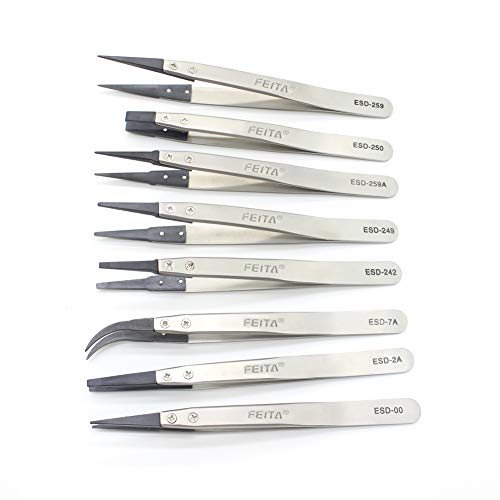
LabAider First Aid Tweezers Review: Disposable Plastic Forceps for Medical, Craft, and School Use
Introduction
The LabAider First Aid Tweezers are disposable plastic forceps designed for a variety of applications. These tweezers are marketed as suitable for medical settings, crafting projects, dressing wounds, handling delicate materials in a lab environment, and even for elementary science experiments. Their disposable nature makes them convenient for single-use applications, promoting hygiene and reducing the risk of cross-contamination. This review will delve into the features, pros, and cons of these inexpensive plastic tweezers to determine their overall value and suitability for different users.
The target audience for these tweezers is broad, ranging from individuals needing a sterile and convenient tool for minor first aid to educators seeking inexpensive tools for classroom use and researchers requiring disposable instruments for laboratory work. Their affordability makes them an accessible option for both personal and professional use.
Key Features
- • Disposable: Designed for single use, promoting hygiene and preventing cross-contamination.
- • Plastic Material: Made from lightweight and durable plastic.
- • Fine Tip: Features a precision tip for handling small objects.
- • Versatile Use: Suitable for medical, crafting, laboratory, and educational settings.
- • Affordable Price: Priced affordably at $9.99 for a pack (quantity unspecified, further investigation needed to determine the number of tweezers per pack).
Pros
- • Affordability: The low price point makes them accessible to a wide range of users and budget-conscious individuals or institutions.
- • Hygiene: The disposable nature significantly reduces the risk of cross-contamination, crucial in medical and laboratory settings. This contrasts with reusable metal tweezers that require sterilization.
- • Versatility: Their design allows for use in diverse settings, from first aid to crafting and scientific experiments. This multi-purpose functionality is a strong advantage.
Cons
- • Durability: While suitable for single-use, the plastic construction may not be as robust as metal tweezers. Heavy or repeated use could lead to breakage.
- • Precision: The fine tip offers decent precision, but may not be as precise as higher-end metal tweezers used for very delicate tasks, such as micro-surgery or intricate electronics work. This is a function of material and manufacturing tolerances.
Who Should Buy?
These disposable tweezers are ideally suited for individuals and institutions prioritizing hygiene and affordability. For example, schools conducting science experiments or clinics providing basic first aid will find these cost-effective. The single-use nature minimizes the risk of infection, making them a practical choice in medical and dental settings where infection control is paramount. Even craft enthusiasts handling small beads or other materials could find these useful for maintaining a clean and efficient work environment.
For those involved in highly precise work, such as micro-surgery or intricate electronics repair, more expensive, higher-quality metal tweezers might be a better option. The plastic material, while hygienic and inexpensive, doesn't offer the same level of durability and precision as higher-grade materials.
Frequently Asked Questions (FAQs)
Q: Are these tweezers sterile?
A: While designed for single use, they are not individually packaged sterile. The user should assume they aren't sterile and practice appropriate hygiene measures.
Q: What is the length of the tweezers?
A: (This information is unavailable from provided product details. Further product specifications are needed to answer this.)
Q: How many tweezers are in one pack?
A: (This information is unavailable from provided product details. This should be clarified on the product page.)
Comparison with Competitor Products
While specific competitor products aren't named here, comparing LabAider's offering against other disposable tweezers would involve considering factors like price per unit, material quality, and tip precision. Higher-priced options often feature improved material and better grip, while lower-priced options may compromise on durability and precision. Metal tweezers, although reusable, require sterilization and present a higher initial cost.
Conclusion
The LabAider First Aid Tweezers offer a compelling balance of affordability and hygiene. Their disposable nature is a significant advantage for many applications, and the versatile design caters to various needs. However, users should be aware of the limitations in terms of durability and precision compared to higher-end alternatives.
Overall, they are a solid choice for many users who prioritize disposability and cost-effectiveness over exceptional precision and long-term durability.