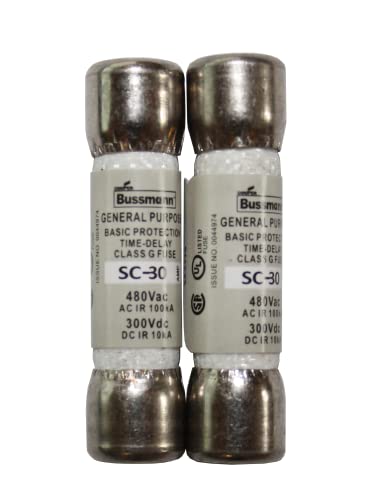
QSU SC-30 30 Amp Time Delay Fuse (2 Pack) Review: Is it Right for You?
In today's world, protecting your electrical systems from overcurrents and short circuits is paramount. Fuses are a critical component in achieving this protection, acting as a sacrificial element that breaks the circuit when an unsafe current level is detected. The QSU SC-30 30 Amp Class G Time Delay Fuse is designed to provide this protection, but how does it stack up against the competition and is it the right choice for your needs?
This review will dive deep into the QSU SC-30 fuse, exploring its features, advantages, and disadvantages. We'll also discuss who this fuse is best suited for and how it compares to other cartridge fuses on the market. Whether you're a homeowner looking to upgrade your fuse box or an electrician seeking reliable fuses for a project, this review will provide the information you need to make an informed decision.
Key Features of the QSU SC-30 Fuse
The QSU SC-30 is a 30 Amp Class G Time Delay Fuse, designed for a range of applications. Here's a breakdown of its key features:
- • 30 Amp Rating: This fuse is designed to handle a maximum current of 30 amps, protecting circuits from overloads and short circuits that exceed this threshold.
- • Class G Fuse: Class G fuses are known for their smaller size compared to standard fuses, making them suitable for applications where space is limited.
- • Time Delay Function: The time delay feature allows for momentary current surges (like those caused by motor startups) without tripping the fuse, preventing nuisance tripping. This is often referred to as a "slow-blow" fuse.
Voltage Rating: Designed to operate safely up to a specific voltage, typically 250V or 600V. Please confirm voltage rating on the product packaging before installation*.
- • 2-Pack: Sold in a convenient 2-pack, providing a spare fuse for future use or replacement.
Pros: Advantages of the QSU SC-30 Fuse
- • Reliable Overcurrent Protection: The primary advantage is its ability to reliably protect electrical circuits from damage caused by overcurrents and short circuits, preventing fires and equipment damage. It’s peace of mind in a small package.
- • Time Delay Feature Reduces Nuisance Tripping: The time delay (slow-blow) characteristic minimizes unnecessary tripping due to momentary surges, which is a significant benefit for circuits powering motors or other inductive loads. This helps maintain uninterrupted operation.
- • Compact Size: The Class G designation means these fuses are physically smaller than standard fuses, making them ideal for installations where space is restricted. This allows for flexibility in panel design and upgrades.
Cons: Disadvantages of the QSU SC-30 Fuse
- • Specialized Application: Class G fuses may not be universally compatible with all fuse holders and electrical panels. Always ensure compatibility before installation to avoid potential hazards or malfunctions. It's best to consult with a qualified electrician if you are unsure.
- • Limited Availability Compared to Standard Fuses: Class G fuses might not be as readily available at local hardware stores compared to more common fuse types, potentially requiring online ordering or a trip to a specialized electrical supply store. This can cause delays during emergency replacements.
Who Should Buy the QSU SC-30 Fuse?
The QSU SC-30 fuse is well-suited for a variety of applications, particularly where space is a constraint and time-delay functionality is required. Homeowners with older electrical panels designed for Class G fuses will find this a reliable replacement option. Electricians working on residential or commercial projects that require specific overcurrent protection with a time delay will also find these fuses useful.
Consider this fuse if you have circuits that frequently experience momentary current surges, such as those connected to motors, appliances with compressors, or HVAC systems. The time delay feature helps prevent frustrating and unnecessary fuse blowouts, ensuring smoother operation. However, always verify that your equipment and electrical panel are compatible with Class G fuses before purchasing.
If you are experiencing frequent fuse failures, it is best to investigate the cause. Consider consulting with a qualified electrician to troubleshoot the issue and ensure your electrical system is operating safely. Simply replacing a fuse repeatedly without addressing the underlying problem can be dangerous.
Conclusion: Price, Performance, and Recommendation
At $15.50 for a 2-pack, the QSU SC-30 30 Amp Class G Time Delay Fuse offers a competitive price point for its functionality. While the specialized nature and potential availability challenges might be drawbacks for some, its reliable overcurrent protection, time delay feature, and compact size make it a worthwhile investment for those who need it. Compared to standard fuses or even other time-delay fuses, the QSU SC-30 provides targeted protection where required, especially for older systems designed specifically for Class G. Consider alternative brands like Bussmann or Littelfuse for a similar product, however. Remember to always consult with a qualified electrician if you are unsure about the correct fuse type for your application.
Expert Verdict: The QSU SC-30 is a solid choice for specific applications requiring Class G fuses with time-delay, offering reliable protection at a reasonable price. Just be sure it’s the right fuse for your system and available when you need it.
Our Rating: 4.2/5
FAQ About Cartridge Fuses
What is a cartridge fuse?
A cartridge fuse is a type of electrical fuse that consists of a cylindrical or rectangular body (the cartridge) containing a fusible link that melts and breaks the circuit when an overcurrent occurs. They're typically used in higher-voltage and higher-current applications compared to plug fuses.
What does 'time delay' mean in a fuse?
'Time delay,' also known as 'slow-blow,' means the fuse can withstand temporary overloads or surges for a short period without blowing. This is useful for circuits that power motors or appliances that draw a higher current when starting.
How do I choose the right fuse for my application?
Always consult your equipment's documentation or electrical panel's labeling to determine the correct fuse amperage and type. Using a fuse with the wrong amperage can be dangerous, potentially leading to equipment damage or fire. If unsure, consult a qualified electrician.
Where can I buy the QSU SC-30 fuse?
You can purchase the QSU SC-30 fuse online through various retailers, including Amazon and specialized electrical supply stores. Availability may vary depending on your location.
Call to Action: Protect your valuable equipment and electrical systems with the QSU SC-30 30 Amp Time Delay Fuse! [Link to purchase]